Clear skies at last!

It’s been a long time – a long time since I last wrote anything here, and a long time since I last spent a few hours under the night sky. As the skies cleared yesterday I knew I’d soon be out in my flip-flops, flattening the crunchy frosted grass in a circle around a tripod, scuttling in and out of the house to change lenses, fetch a different eyepiece, put a camera battery on to charge or find a warm hat.

Yesterday and today we had a lovely view of the crescent moon sliding down over the rooftops. Yesterday its position enabled me to spot Mercury, which is approaching maximum eastern elongation (that is to say, the point where it is as far to the left of the Sun as it ever gets in its orbit) and shining quite brightly. It’s been a few years since I last saw Mercury. We’d sometimes get a sight of it from Blythe Hill Fields, and I’ve watched it passing in front of the sun on one occasion.

Mercury is the white pixel to the right of the TV aerial and at about 11 o’clock from the cloud

The moon was showing a good degree of earthshine, where light emitted by the Sun hits the surface of the Earth, with about 30% of it getting reflected back into surrounding space. A tiny part of that reflected light hits the moon, and the moon then reflects about 12% of that tiny part back to us, allowing us to see the main features of the parts of the moon that are not directly lit by the Sun.

A picture speaks a thousand words

This evening I had a brief attempt at finding Neptune, which is currently in eastern Aquarius to the south of the square of Pegasus. I was using my new-to-me dobsonian telescope, a lumbering low-tech beast with about 240 square inches of mirror polished to a smooth parabola to within a tenth of the wavelength of visible light, held together with aluminium poles, plywood and nylon wing nuts (picture at the top of this post). When assembled, it won’t fit through any of our doors and there is only one room downstairs that is tall enough for it to stand upright, so it spends most of its life in pieces in a shed. Anyway, I quickly realised I would struggle, partly because I had assembled the leviathan on the patio, from where Aquarius was mostly behind the neighbour’s apple tree.

It’s a lovely tree though

Giving up on Neptune, I then found Uranus skulking around the borders of Pisces and Aries, south of Andromeda and much easier to find as it is almost visible to the naked eye and, when viewed through the telescope is clearly a disc rather than a point of light.

I spent the following hour or two catching a few favourite sights and taking some photos.

The California nebula with passing satellites (hey, thanks Elon)
The North America Nebula (and the Pelican to the right)
The Veil, a remnant shell of a supernova explosion, discovered by William Herschel in 1784 and expanding at a rate of about a million miles an hour
An old favourite, the Andromeda galaxy (M31), the largest of our local group of galaxies (and in this instance local means less than 3 million light years away). As well as the customary passing satellite, this shot shows its companion galaxies M32 and M110.

Then time to come in and eat some delicious मटर पनीर with roti and rice, all expertly made by our elder son who has been feeding us feast after feast over the last nine months and putting up with country life, being asked if he would like to start up a brass band and serving at the local pub a few days a week.

June dawns start early

The Thame near Winchendon Mill

I do like sleeping, and consider myself quite expert at it. However, at this time of year it seems wrong to stay in bed while there’s so much to see, hear and smell outdoors. I’m very fortunate to be able to be able to go on walks in the countryside without any advance planning (other than, perhaps, making sure the relevant batteries are charged and letting other members of the family know I might be out early) and I’ve been taking advantage of this recently.

Blurred, of course

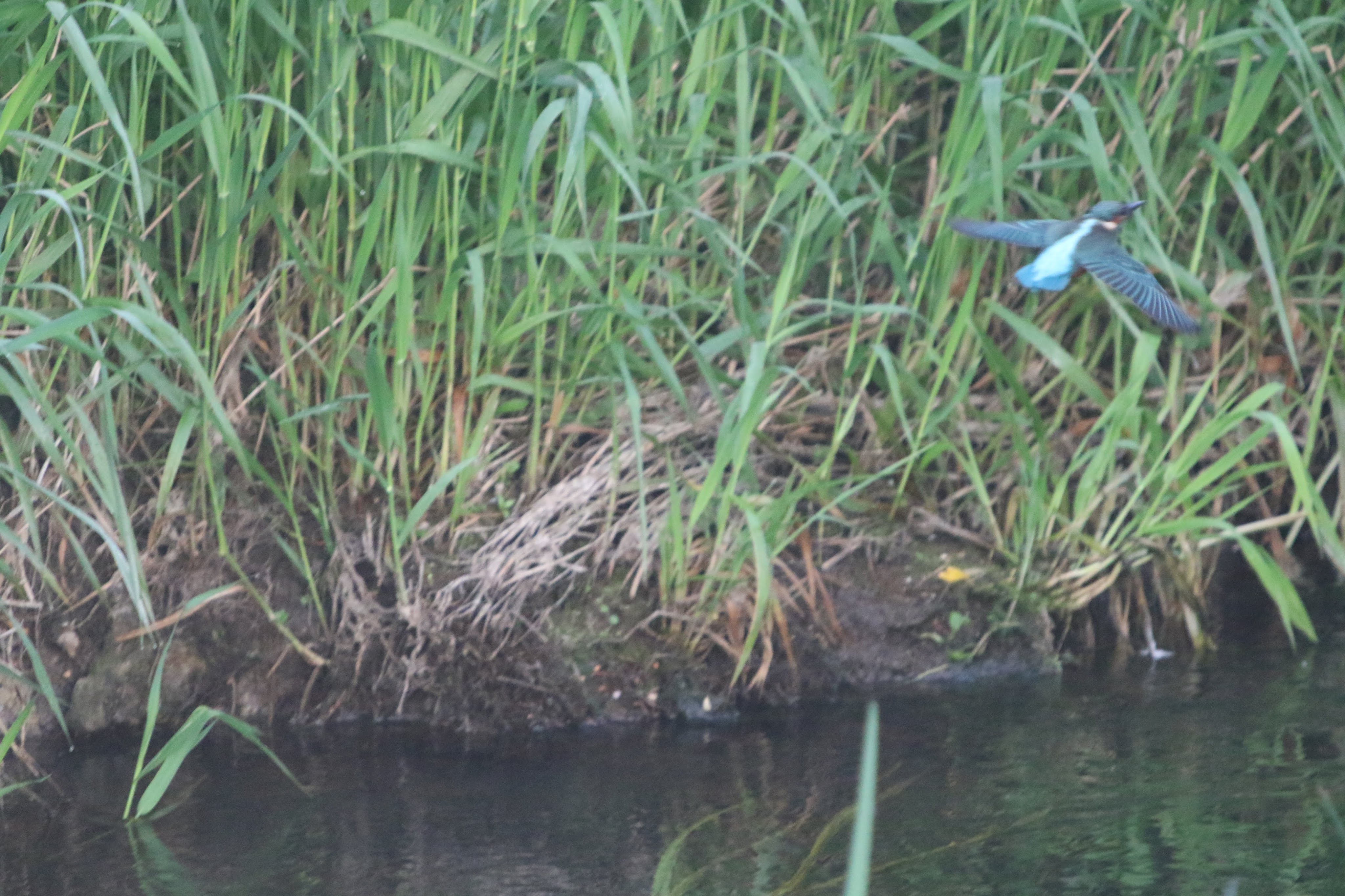
Last weekend I watched a beautiful sunrise, saw a kingfisher close up (it perched for a moment on the handrail of the footbridge where I had been standing for nearly an hour) and watched a reed warbler ferrying food to a nest hidden in a bank of nettles.

Reed warbler

I’d listened to a cuckoo calling down by the sewage works. I do wonder what it is like for the bird in whose nest the cuckoos lay their eggs. Do they just accept that they have an unusually large infant on their hands? Are they proud of how quickly it grows? Here’s a short video of a misty Thame valley with a cuckoo calling:

https://photos.google.com/photo/AF1QipPyJUrH8VeN3elG5wLvNjRZcL3kNJZgGnkuwEJL

I also had a chance to test my athletic skills as a small herd of agitated cows with their calves appeared out of the thick mist and surrounded me. Maybe they were just curious, but I wasn’t going to hang around to find out. A short canter to the nearest fence was followed by a leap of the sort that I think I used to do in PE lessons at school – it was meant to be an elegant vault but became an ungainly collision with the top rail of the fence and a heavy landing on the other side.

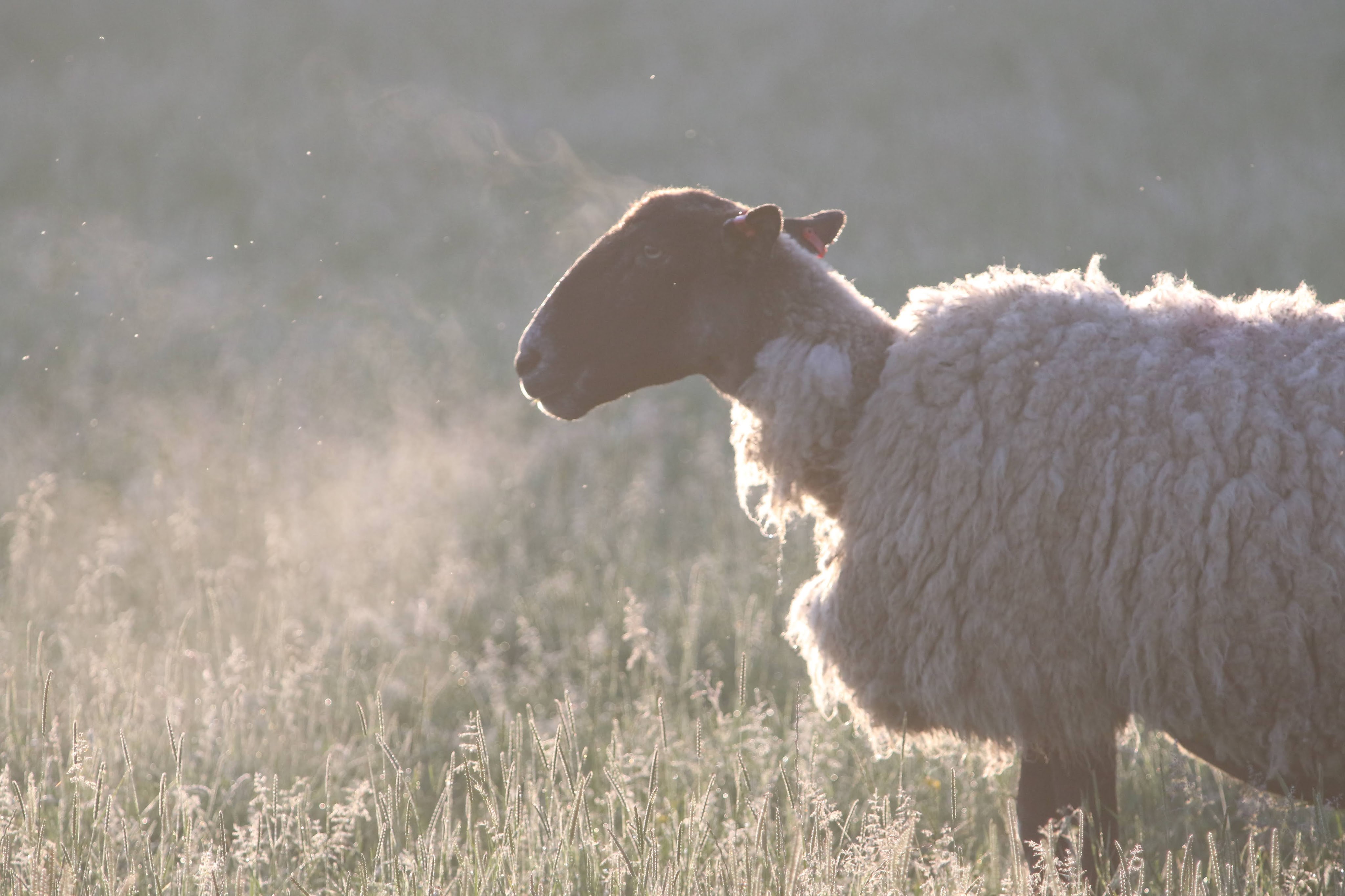
This morning, the sky was cloudless and there was only a little mist rising off the river and off the sheep.

Earth’s shadow was retreating in the west behind my favourite black poplar

A kingfisher put in an appearance, approaching me from behind, flying over my shoulder and disappearing about two seconds later. On the return leg, I paused by the grove of ash trees below Cowley Farm and enjoyed the way the birdsong was bouncing off the tall straight trunks.

Birdsong

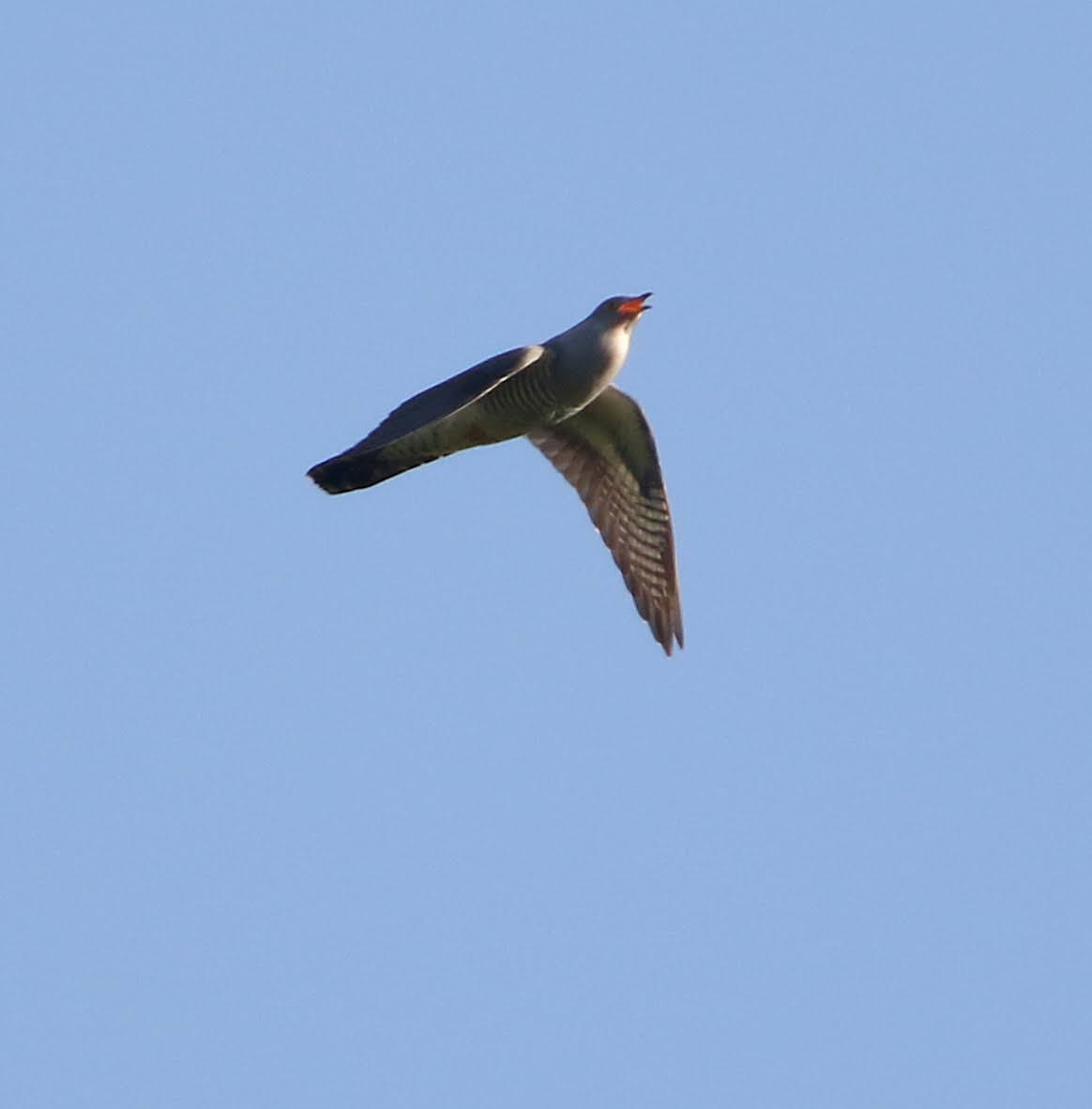
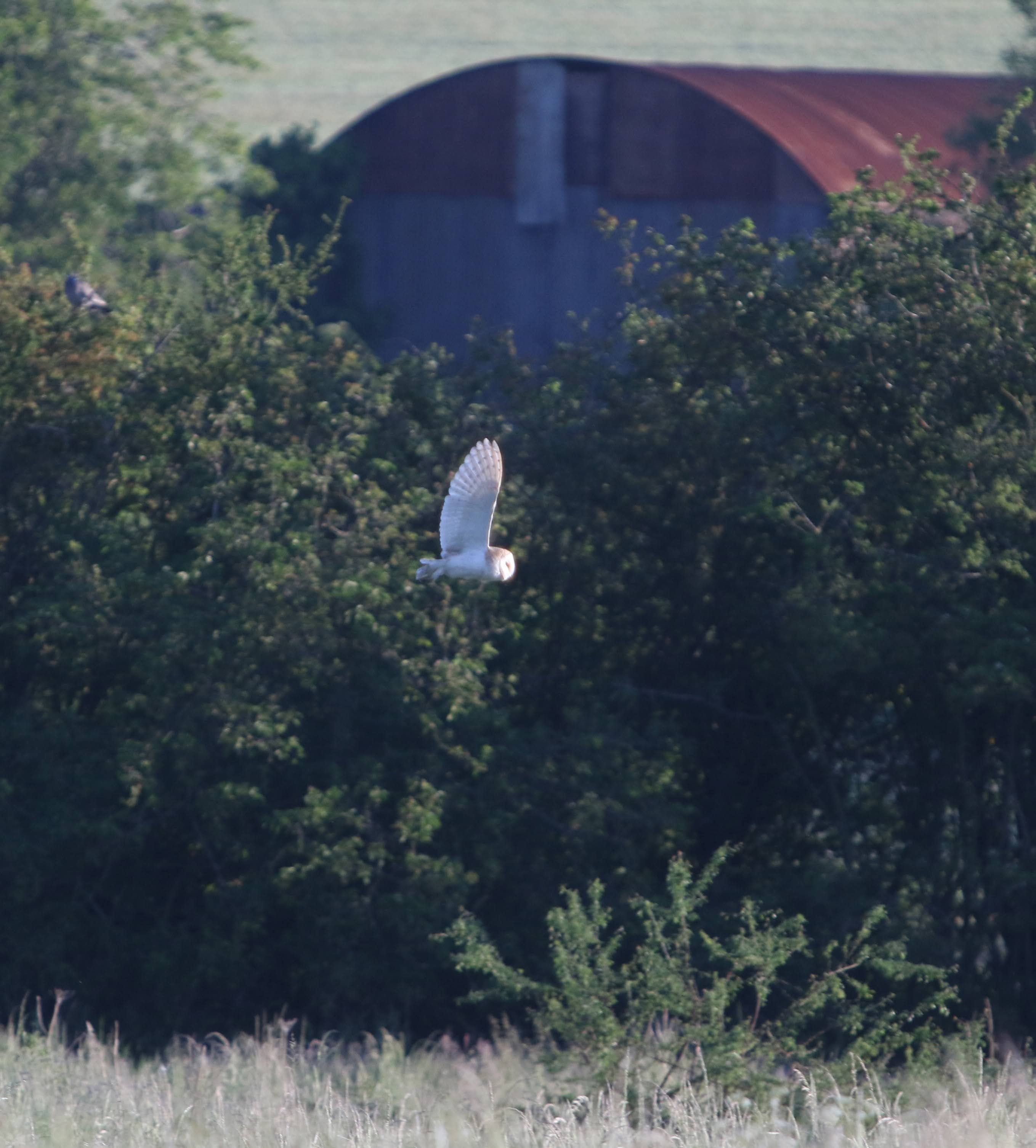
I was treated to a good view of a cuckoo calling as it flew over Nether Winchendon, and I was pleased to see a barn owl out hunting, having not seen one for a couple of months.

Barn owl near Winchendon Mill

Rather than going on with a tedious list of what I saw, pictures can be found here: https://photos.app.goo.gl/ASxEdrkBY4MAapuy6

I returned home in time to eat some delicious cilbir cooked by my son – poached eggs on a layer of yogurt with spicy butter and garlic, mopped up with freshly baked bread topped with nigella seeds. I am spoilt, the sun is still blazing outside as I type this, and I have a feeling that I might just doze off this afternoon.

Two by two

Yes, it’s that time of year again, and some of the fields around Cuddington are full of the bleating of new lambs, almost always in pairs. As a parent of twins, I find this rather endearing but it also reminds me of how many of the photos I take are based on things in twos. Sometimes it’s a twin thing, but Spring also means courtship and the pairing up of animals.

These goosanders were flying up the river above Nether Winchendon. They’re elegant animals with serrated bills for catching fish, and I have seen many of them up and down the Thame, including a larger group on the new backwater created near Eythrope by the Freshwater Habitats Trust in association with the River Thame Conservation Trust and the Waddesdon Estate.
March is associated with mad hares, and while I’ve only had a very distant view of them boxing, there are often pairs to be seen in the fields between Nether Winchendon and Eythrope.

Sometimes things that arrive in pairs are visually striking simply because of how they are aligned, and there are times when two passing birds create new and unexpected shapes. Geese seem to be particularly good at this.

and ducks too

There are other pairs around, some of them faster than others…

Otter delight

I went out at 6.30 this morning thinking I’d probably see pretty much the same things I’d seen two days ago. Reed buntings, yellowhammers, herons, redwings, chaffinches and some distant deer. I wondered if I might see a hare or two.

Well, I was not disappointed. I’ve seen a few swirls and heard a few heavy sploshes in the river recently, and today I was treated to this lovely head popping up through the vegetation and huffing at me. It disappeared pretty quickly, with just a couple more surfacings and no more huffing.

A bit further downstream I encountered the remains of a signal crayfish, which is probably something that otters love to eat. I’m used to thinking of these alien species as entirely negative, but if they are providing sustenance for our recovering otter population (not to mention the perch and chub in the river who like to munch on these delicacies) then perhaps it’s not all bad. I suppose the real concern is the spread of disease to our native crayfish, but in the Thame I suspect that these have been wiped out long ago by agricultural run-off, sewage spills and the like.

Wet and fowl

I have just thrown away a pair of wellington boots. They had not sprung a leak, nor had I grown out of them. No, they had acquired a terminal odour – probably a lethal cocktail of human foot stuff and bits of river water that have slopped over the top as I waded through flood water – that meant they had to go. They’ve served me well over the last three years, particularly during the wetter months when any walk near the Thame is likely to involve a bit of wading and quite a lot of sinking into sticky mud.

Time, perhaps, to reflect on some of the things I have seen while wearing those boots. Remember, please, that this is the mild-mannered Thame valley and that there are not going to be many exotic sightings here.

Mandarin family

At the beginning of October, when we had an extraordinary period of heavy rain, I met this family of mandarin ducks. I’d previouly seen one female lurking in heavy summer vegetation on the river but it had taken me quite a while to identify it, and it was good to have this confirmed when I saw this group take flight.

Je ne egret rien

Then there are the elegant little egrets. They’re quite shy, and usually fly off before you are within a few hundred yards, but every now and then one will take off close by. This one was kind enough to do a lap of honour before heading eastwards.

goosanders

When the rain comes, some of the fields up towards Eythrope fill with water, and one of these has provided some lovely glimpses of goosanders, as well as egyptian geese. Over the last month, we have had daily flypasts of greylag and canada geese; sometimes half a dozen, sometime closer to 50 of them at a time, honking away and usually heading northwards over the village. They accumulate down by Cuddington Mill and up near Eythrope.

Teal

As well as geese, there are plenty of ducks. The picture at the top shows mallard, teal and widgeon (I think) and it was the teal that really stole the show this week, with some quite large flocks circling round and making their high-pitched peeping noise which I estimate is about 2,360 Hz (for an example, try https://www.xeno-canto.org/sounds/uploaded/UAJQCCPUIQ/XC547249-Anas%20crecca.mp3). There were a few hundred there the other morning and they fly very fast. That, combined with the fact they had the sun behind them, made it hard to get any clear pictures but I did manage one photo that shows the characteristic flash of colour on their wings.

teal

In case you were wondering, I do not have an uncanny ability to judge the frequency of duck calls. I used an online tone generator which also revealed that, above about 9,400 Hz, the ducks can be as rude as they like about me, as I won’t be able to hear them.

When the comet came to Cuddington

When the UK last had a beautiful comet for all to see, I was in a busy part of my life, in a small flat in London with two small children and not a great deal of spare time. However, I do remember the views of Comet Hale Bopp that Spring from our third floor balcony.

Since then, my interest in astronomy has been revived and I have spied a few fainter comets over the intervening years. Comet Holmes in 2012 was bright enough to see from our garden but was basically a blob (see below).

Comet Holmes in 2012. Wow.

Panstarrs was a very faint smudge in the evening sky, but was at least comet-shaped. McNaught was briefly visible from Waterloo Bridge on a cold blustery late afternoon in, I think, early 2006. There are other names I vaguely remember, such as Lovejoy, Machholz, LINEAR and ATLAS but I have no memories of what they looked like.

But the Summer of 2020 has been blessed with a spectacular visitor to our northern skies in the form of C/2020 F3, discovered in March by an orbiting infra-red observatory called NEOWISE and therefore referred to as Comet NEOWISE. It looped round the sun on 3 July and within a week was a fine sight before dawn.

My first view was at about 1am on a Saturday morning. I’d set off with a tripod and camera over my shoulder, expecting a long walk to a vantage point and a long wait for it to appear over the horizon, so was was surprised to see a distinct streak of light in the sky above Tack’s Orchard as I approached the end of Lower Church Street. For a moment, I thought it was a security light reflected off an overhead wire, but as I stumbled into the very dark (and recently bulldozed) near end of the tractor field, there it was, looking just as a comet should.

Since then, I have had two sessions watching it, now from the comfort of our back garden as it is now rising higher in the northern sky into the constellation of Ursa Major. It’s below and to the right of the familar “Big Dipper” or Plough asterism, near the delightfully named Talitha (iota Urs Maj) and its twin tails reach up towards the right hand end of the Plough.

Its brighter dust tail fans slightly to the east, while the fainter blue trail (of glowing CO+ ions) is driven back by the solar wind in a straight line. The coma (surrounding the nucleus) has a strong green glow caused by cyanogen.

On 17 July, from our garden bench

Last night (19 July) I took what may be my last photos of this visitor. The weather is set to deteriorate, and the comet is definitely fading as it starts its long retreat from the inner solar system and heads back towards to Kuiper Belt, or wherever it came from. We’ll not see this one again, as its orbit takes several thousand years to complete.

Goodbye, and thank you for visiting Cuddington!

A couple of hunters

I had been moping about the house, feeling a bit under the weather and also sad about our missing cat Figaro. I’d driven about 450 miles the day before, and motivation was in short supply. The suggestion was then put to me (by someone who knows me well and can easily prescribe a sensible remedy) that I should take my camera out for a walk.

From the Lower Green I headed out on my usual loop, beginning with the tractor field where I met a barn owl, the first I have seen in many months, hunting around the edge of the field.

The Barn Owl Trust suggests that they do now breed as early as March, so perhaps its willingness to hunt in broad daylight is related to the presence of hungry young. It was certainly very busy, constantly quartering over the meadow and dipping down from time to time. Even when it perched on the fence, it was still watching the ground intently.

Further up the Thame I met a couple of those vampire deer, one of them looking a bit nervous in a quiet pasture by the river, the other having a nice lie down in the sun on the hillside near the circle shown below. (By the way, does anyone know why this is here? I think I saw an estate map at Waddesdon which has “Ruins” marked around here.)

Then the second hunter came into view. I’m used to seeing foxes and we used to enjoy watching them snoozing on our shed roof in Forest Hill, or watching their cubs rolling on the radishes at the top end of the garden. But out here, I’ve only seen a few foxes around and they are very shy. That could be something to do with how country folk treat them, I suppose. This one emerged from a reed bed, watched the deer for a bit and then started trotting towards me until it saw me.

Fluffy, moi?

There were lots of other things to see, but perhaps I’ll save them for another post.

No water shortage right now

Those horses must have gone elsewhere

Thank goodness we’ve not been hit by floods on the scale that people have experienced in the Sheffield and Doncaster areas in recent weeks. But there’s a lot of water out in the fields around here, more than we had last winter. It’s cut some walks short, and I found myself giving my daughter a piggy-back along the path to Nether Winchendon yesterday, as she has no wellies and the River Thame was finding alternative routes to Dorchester. At the age of 25 she’s still quite light but not as light as I remember her being when I carried her on my shoulders to see Chris Boardman and Bjarne Riis competing in the prologue time trial at Rouen in the 1997 Tour de France.

More rain heading towards Cuddington

My understanding of weather patterns over the decades is not detailed enough for me to be able to make links between this sort of flooding and the effects of human activities on the climate, but it does at least make me think about how badly things could turn out if we allow man-made climate change to continue unchecked. For the time being, it has provided me with some photo opportunities.

The Esso garage on the edge of Thame is brightly reflected in the flooded meadow where, until very recently, two ponies were grazing companionably.

The flooded fields down towards Nether Winchendon are presumably performing a valuable role as a buffer, allowing the rainwater to spread sideways rather than hurtling down the Thame. The redistribution of silt may also help to enrich the land and help some of the wildlife, although I can’t help wondering what happens to things like stoats, hedgehogs, voles or mice when this happens.

Fireworks!

Most of my excursions around Cuddington are quieter than this one. On Friday we were treated to a glorious display of fireworks on the playing field and I was there in the front row going “ooh” every few seconds.

I’m back – with extra dawns

Dawn panorama

I suspect not many people have been wondering why things have been so quiet on this blog. Anyone who sees my instagram and facebook posts will know that I’ve been out and about beyond the confines of the Cuddington area, and that many of the photos I have taken and posted online would seem out of place here. That’s not to say I won’t post some of them here as well…

So I’m back, and staying relatively parochial for the time being. A couple of dawn walks have reminded me of how quickly the seasons shift. First of all, there was the sharp frost on the morning of 8 September. It wasn’t the first of the autumn, but it was a bit of a surprise as I headed out across the fields before dawn. Even after 7am, by which time the sun was well above the horizon, the ice was clinging to the plants.

Frosted nettle

The birds were quiet and not very visible – a few jays, woodpeckers (greater spotted and green) and the usual crows, jackdaws and ravens, but no songbirds to speak of.

The upper Thame has got quite overgrown again, but where you can see the water, there are many fish to be seen. Mainly minnows and roach. Enough to keep the herons interested, clearly.

Out in the fields, there were hares and vampire deer around.

Chinese Water Deer

And just look at the colours! The thick greens are giving way to gold and copper, although among the trees it’s only really the horse chestnuts that have turned, and that’s probably because of their particular lurgy. Leaves are dropping into the river, and most of the crops have been harvested (some maize is still out there) and the overall effect is that there’s a whole host of new textures and colours to enjoy, including some that could be mistaken for London Overground seating.

Upholstery?

The owls have started making themselves heard again, and I suspect that the swallows will all be gone in the next few days. It will rain, and the river will rise. Next weekend I will probably try to gather some sloes, although I doubt if I will find the pickings as rich as I did this time a year ago, when a short walk down the track towards Ridgebarn Farm yielded about 3lbs of sloes on top of the 8lbs of blackberries I picked in about three hours.

mist rolling away at sunrise
mist again

There will be misty mornings, but instead of the chattering warblers, I’ll probably be hearing the harsher calls of fieldfares and perhaps the quiet burbling of redwings as they gorge on the berries in the hedgerows.